
The Max Delbrück Center bids farewell to Thomas Sommer
For three decades, Thomas Sommer conducted research at the Max Delbrück Center and shaped its development: as a scientist, ombudsman, committee representative, and interim board member. On December 6, the center will honor him with a symposium on his favorite topic — the cell's recycling system.
On December 6, 2024, the Max Delbrück Center will bid farewell to a long-time friend who has significantly influenced the institution: Professor Thomas Sommer. He joined the center as a junior group leader in the early 1990s — and remained for 30 years. He served as an ombudsman for PhD candidates multiple times and twice took on the role of interim head of the Max Delbrück Center, most recently from 2019 to 2022. As a manager and networker, he represented the center in various committees. Now, he is starting a new chapter in his career. Sommer has become the managing director of the Institute for Biomedical Translation (IBT) Lower Saxony in Hanover, which supports biomedical startups in the region.
Basic research and application are inseparable, Sommer says, as all therapies originates from basic research. He promoted this philosophy in his roles at the Max Delbrück Center, helping to create the structures that allow researchers to both understand the fundamentals of life and develop new therapeutic approaches.
A symposium on the cell’s recycling system
His research career has been dedicated to studying the ubiquitin-proteasome system, also known as the cell's recycling system. Ubiquitin acts as a tag, marking proteins that have accumulated defects for various reasons, which render them nonfunctional or even harmful, and prepares them for disposal. The cell breaks down the marked proteins and reuses their components to create new ones.
The recycling system is the focus of the symposium titled "Targeted proteolysis: From basic discovery to clinical application," featuring keynote lectures by Nobel Prize-winning chemist Professor Aaron Ciechanover from the Israel Institute of Technology in Haifa and Professor Fleur M. Ferguson from the University of California, San Diego. A festive farewell party will follow at 4:00 PM.
Media representatives are warmly invited. Accreditation can be obtained via email at [email protected].
Further information
- Farewell-Symposium at Max Delbrück Center
- Portrait of Thomas Sommer
- Between Buch and Haifa
- IBT Lower Saxony
Photo for download
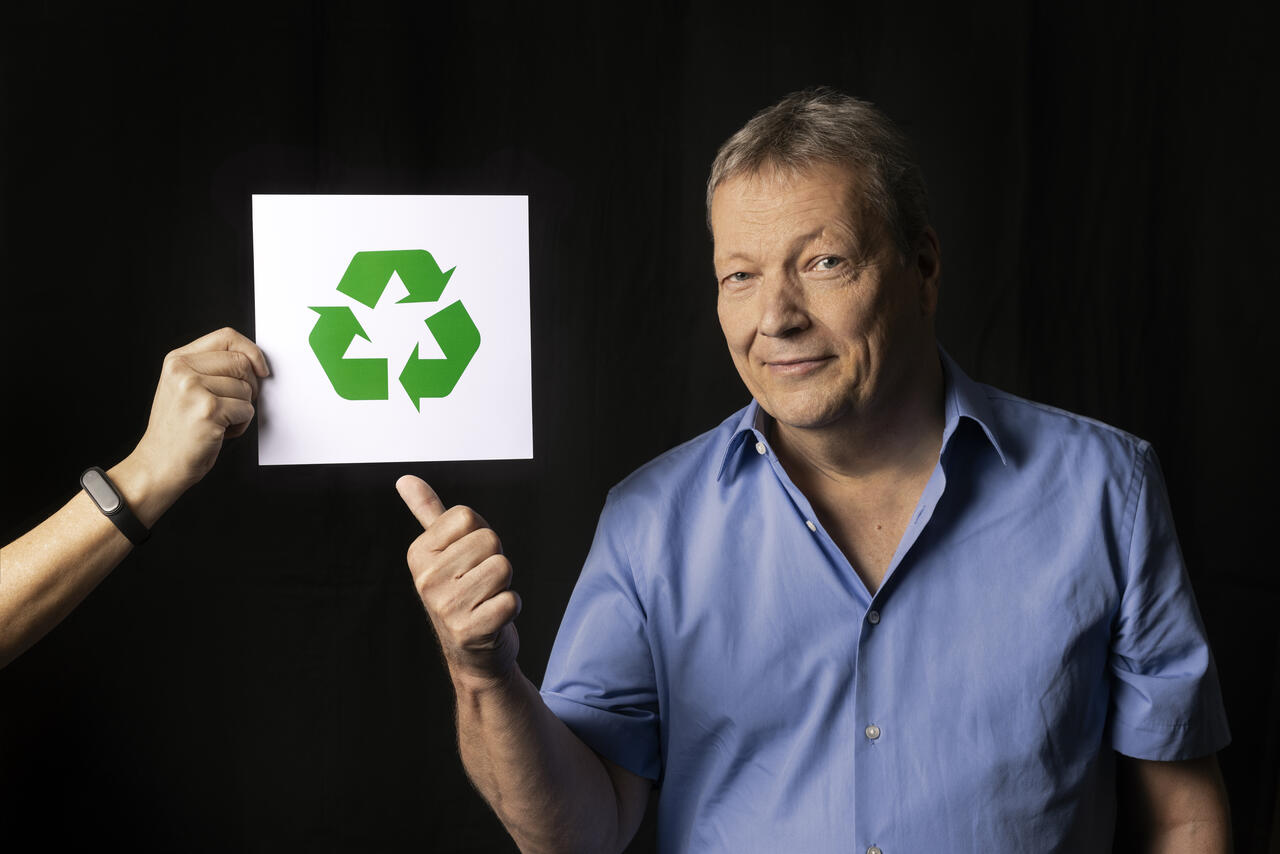

Portrait of Thomas Sommer. Credit: Pablo Castagnola, Max Delbrück Center
Contact
Jutta Kramm
Head, Communications
Max Delbrück Center
+49 30 9406-2140
[email protected] oder [email protected]
The Max Delbrück Center for Molecular Medicine in the Helmholtz Association (Max Delbrück Center) is one of the world’s leading biomedical research institutions. Max Delbrück, a Berlin native, was a Nobel laureate and one of the founders of molecular biology. At the locations in Berlin-Buch and Mitte, researchers from some 70 countries study human biology – investigating the foundations of life from its most elementary building blocks to systems-wide mechanisms. By understanding what regulates or disrupts the dynamic equilibrium of a cell, an organ, or the entire body, we can prevent diseases, diagnose them earlier, and stop their progression with tailored therapies. Patients should be able to benefit as soon as possible from basic research discoveries. This is why the Max Delbrück Center supports spin-off creation and participates in collaborative networks. It works in close partnership with Charité – Universitätsmedizin Berlin in the jointly-run Experimental and Clinical Research Center (ECRC), the Berlin Institute of Health (BIH) at Charité, and the German Center for Cardiovascular Research (DZHK). Founded in 1992, the Max Delbrück Center today employs 1,800 people and is 90 percent funded by the German federal government and 10 percent by the State of Berlin.